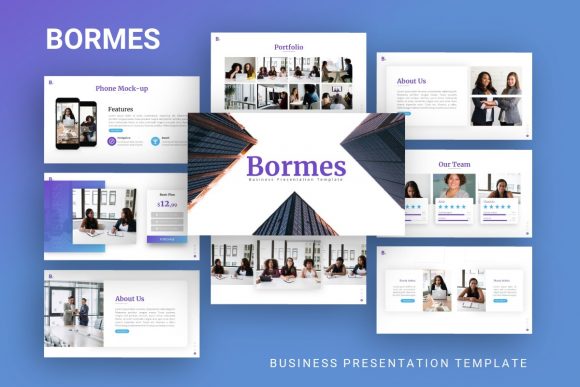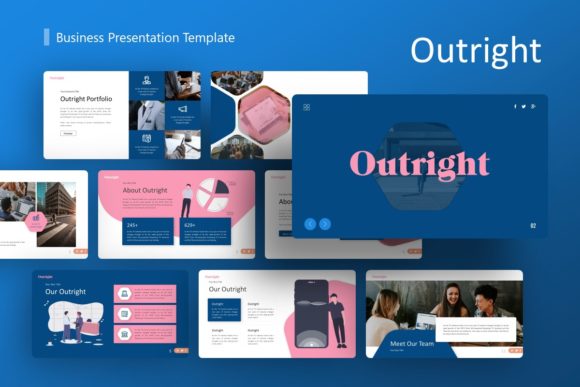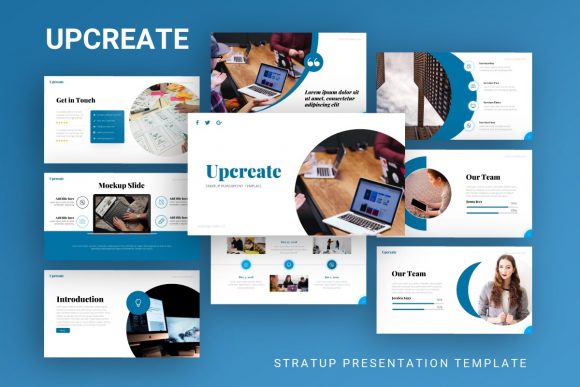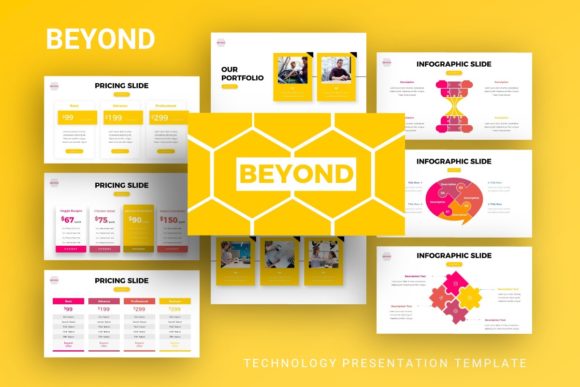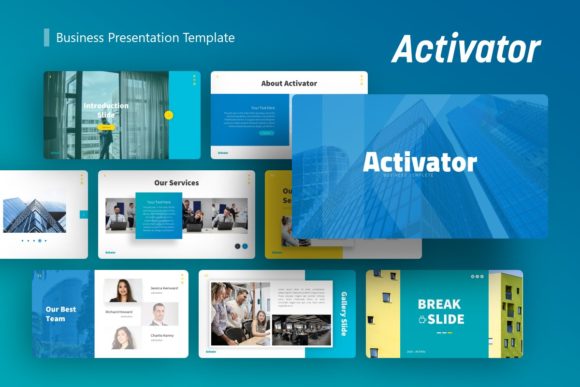
Activator Business Presentation: A Versatile Framework for Modern Visual Communication
In the current landscape of digital communication, the distinction between a simple slide deck and a comprehensive visual strategy has become increasingly blurred. Professionals across diverse sectors are no longer looking for static templates; they require dynamic systems that adapt to specific narrative needs without sacrificing design integrity. Introducing Activator Business Presentation represents a shift toward this modular approach. Rather than serving as a rigid container for text and images, this resource functions as a flexible infrastructure designed to support everything from high-stakes corporate pitch decks to intimate personal portfolios. Understanding the architecture and practical application of such a tool is essential for creators, business owners, and educators who aim to maintain professional standards while reducing production time.
Structural Integrity Through Master Slide Architecture
The foundational value of any professional presentation asset lies in its underlying technical structure. For users ranging from hobbyists to seasoned researchers, the primary friction point in slide creation is often the inconsistency that arises from manual formatting. The Activator Business Presentation addresses this through a rigorous Master Slide system. This feature ensures that global changes—such as typography updates, color palette shifts, or logo placement—propagate instantly across all 36 slides included in each template variation.
This architectural approach serves two critical purposes. First, it maintains visual coherence, which is a key component of audience trust and information retention. When margins, font sizes, and alignment grids remain consistent, the viewer’s cognitive load decreases, allowing them to focus on the content rather than distracting formatting errors. Second, it democratizes high-end design. Users without formal graphic design training can leverage these pre-built masters to achieve pixel-perfect results. The system acts as a guardrail, preventing common layout mistakes while still offering enough flexibility for customization. For agencies managing multiple client accounts, this master-based workflow significantly reduces quality assurance time, ensuring that every deliverable meets brand guidelines regardless of which team member assembled the deck.
Sector-Specific Applications and Adaptability
While the technical backbone provides stability, the true utility of introducing Activator Business Presentation into a workflow is realized through its sector-specific adaptability. A single design system must perform differently depending on the context. The versatility of this template allows it to function effectively across distinct verticals by altering content density and visual hierarchy.
Creative Agencies and Portfolios
For creative professionals, photographers, and designers, the presentation serves as an extension of their artistic identity. In this context, the picture placeholders and resizable graphics are paramount. Unlike standard corporate templates that prioritize bullet points, the Activator framework accommodates high-resolution imagery and negative space necessary for visual storytelling. The drag-and-drop functionality allows photographers to swap portfolio pieces rapidly without breaking the layout grid. This is particularly relevant for freelancers who need to tailor their portfolio for different prospective clients; a wedding photographer can emphasize emotive portraiture for one pitch and architectural composition for another, using the same underlying file structure.
Corporate Profiles and Startups
Conversely, business entities and startups utilize the template to convey data, strategy, and financial projections. Here, the handcrafted infographics included in the PowerPoint file become the primary asset. Startups preparing for investor meetings require visuals that simplify complex business models without trivializing them. The vector icons and editable charts allow entrepreneurs to visualize market size, user growth, and competitive landscapes with precision. Because these elements are native to PowerPoint rather than imported as static images, they remain fully editable. This means that when quarterly numbers change, the infographic updates automatically, eliminating the need to return to external design software like Illustrator or Photoshop.
Educational and Research Contexts
Educators and researchers represent a third distinct user group with unique requirements. Academic presentations often suffer from "death by PowerPoint," characterized by dense text and poor readability. The Activator Business Presentation offers a structured alternative that encourages synthesis over transcription. The 36-slide variety provides ample options for section dividers, methodology breakdowns, and citation layouts. By utilizing the pre-designed hierarchy, researchers can guide students or peers through complex arguments logically. The clean aesthetic helps maintain engagement during long lectures or conference presentations, where visual fatigue is a genuine barrier to learning.
Technical Specifications and Asset Management
Beyond aesthetics and use cases, the practical management of digital assets defines the long-term viability of a presentation template. When evaluating resources like the Activator Business Presentation, understanding what is technically included versus what is implied is crucial for avoiding workflow bottlenecks.
- Native Vector Scalability: All graphics are built as vectors within the .PPTX environment. This ensures that presentations look crisp on any display, from laptop screens to large-format projection systems, without pixelation.
- Comprehensive Documentation: The inclusion of a dedicated documentation file bridges the gap between download and execution. This resource typically guides users through unlocking masters, replacing media, and exporting final files, reducing the learning curve for non-technical users.
- Iconography Libraries: Access to a curated set of vector icons eliminates the need for disparate asset sourcing. Consistent icon style is often overlooked but is vital for professional polish; mixing line-weight styles or perspective types can subconsciously signal amateurism.
- Placeholder Logic: The drag-and-drop picture placeholders are coded to maintain aspect ratios. This prevents the accidental stretching or cropping of images, a common issue when manually inserting media into unstructured slides.
It is also important to note the licensing and preview distinctions. As with most professional digital assets, the images shown in promotional demos are for preview purposes only and are not included in the downloadable files. This industry-standard practice protects intellectual property rights of stock photographers while keeping the file size manageable for the end-user. Professionals should factor in time for sourcing their own high-quality imagery that aligns with their specific messaging, treating the template as a layout engine rather than a finished product.
Strategic Customization and Brand Alignment
Adopting a pre-made template does not mean abandoning brand uniqueness. On the contrary, tools like the Activator Business Presentation are most effective when treated as a starting point for bespoke communication. The "easy customizable contents" feature should be leveraged strategically to align with organizational identity systems.
Customization extends beyond simply changing colors to match a logo. It involves adapting the tone of the infographics and the pacing of the slides to fit the audience. For a conservative financial institution, a user might strip back decorative elements and utilize a muted color subset of the template to convey stability. For a tech startup launch, the same user might maximize contrast and utilize dynamic transition slides to signal innovation. The 36-slide count provides a surplus of options, encouraging users to curate rather than cram. Selecting the right 15 slides from a pool of 36 is a more effective communication strategy than forcing content into ill-fitting layouts.
Furthermore, the ability to edit all graphics natively allows for the integration of proprietary data visualization. Instead of relying solely on generic chart styles, analysts can modify the vector shapes to reflect specific industry metrics or internal KPIs. This level of granular control transforms a generic template into a proprietary communication tool that competitors cannot easily replicate, even if they use the same base asset.
Evaluating Workflow Efficiency and ROI
For business owners and agency directors, the decision to implement a standardized presentation framework is ultimately an economic one. The return on investment for a resource like the Activator Business Presentation is measured in hours saved and consistency gained. Creating a pitch deck from scratch can take dozens of hours when accounting for ideation, layout, asset creation, and revision cycles. Utilizing a master-slid based system compresses this timeline significantly.
However, efficiency should not come at the cost of relevance. The most successful users of this template are those who invest time upfront in setting up their master themes correctly. By defining paragraph styles, color variants, and default image treatments immediately after purchase, teams create a reusable internal asset. This initial setup acts as a force multiplier for future projects. Over the course of a year, the cumulative time savings on recurring reports, sales decks, and training materials can amount to hundreds of productive hours.
Additionally, the psychological impact of professional consistency cannot be overstated. Whether presenting to potential investors, new clients, or university students, the quality of visual delivery influences perception of competence. Pixel-perfect illustrations and aligned typography signal attention to detail. In competitive environments where stakeholders review dozens of proposals or portfolios, this baseline level of polish provided by the Activator framework ensures that the presenter is judged on their ideas rather than distracted by poor execution. Ultimately, the template serves as a silent partner in communication, handling the structural heavy lifting so the presenter can focus entirely on the narrative and the human connection with their audience.