Evaluating the Medical Presentation Template for Professional Healthcare Communication
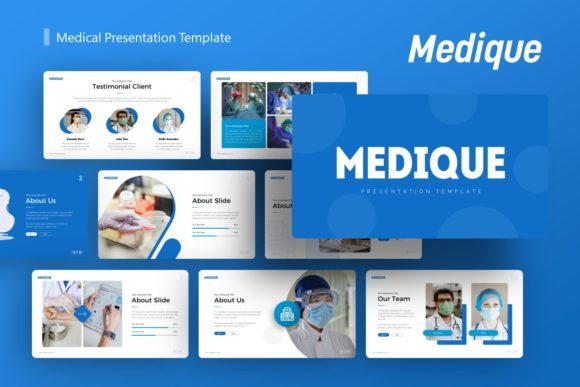
In the healthcare and medical technology sectors, the clarity of visual communication is often as critical as the accuracy of the data itself. Whether presenting clinical trial results to stakeholders, pitching a health-tech startup to investors, or outlining a corporate profile for a private practice, the medium must support the message without distracting from it. The Presentation Template - Medical, specifically the Medique Medical Presentation, addresses this need by providing a structured, professional framework designed for high-stakes environments. While marketed with a broad scope that includes creative agencies and personal portfolios, its core utility lies in its ability to translate complex medical information into digestible, visually consistent slides.
This evaluation examines the practical application of this template, moving beyond feature lists to assess how it performs in real-world workflows. For professionals aged 20 to 50 who manage their own presentation assets, understanding the balance between aesthetic flexibility and technical reliability is essential before integrating new tools into their repertoire.
Core Architecture and Technical Specifications
The foundation of any usable presentation asset is its technical construction. The Medique template provides 36 unique slides per template variation, which offers sufficient breadth for comprehensive decks without becoming unwieldy. More importantly, these slides are built upon Master Slides within PowerPoint (.PPTX). This distinction matters significantly for long-term maintenance. When global changes are required—such as updating a clinic’s logo, adjusting brand colors, or changing font families across an entire deck—Master Slide integration allows these edits to propagate instantly rather than requiring manual adjustments on individual pages.
The inclusion of handcrafted infographics specifically designed for PowerPoint is another functional advantage. In medical presentations, data visualization is rarely optional. Generic chart tools often fail to capture the nuance of healthcare metrics. Having pre-designed, editable infographic elements means users can visualize patient demographics, treatment efficacy, or financial projections without resorting to external graphic design software. Because these graphics are vector-based and fully resizable, they maintain crispness whether projected on a conference room screen or viewed on a tablet during a bedside consultation.
File Assets and Resource Management
Users receive a complete package including the .PPTX file, documentation, and vector icons. The documentation file is particularly valuable for those less familiar with advanced PowerPoint features, serving as a guide to unlocking the template's full potential. However, a crucial caveat for all users is that demo images are for preview purposes only. This is standard industry practice, but it necessitates that professionals have their own library of licensed medical photography or custom illustrations ready before beginning production. Relying on placeholder imagery in a final deliverable undermines credibility, so asset preparation should be considered part of the implementation timeline.
Versatility Across Healthcare and Business Contexts
While labeled "Medical," the structural design of this template supports a wider array of use cases relevant to modern professionals. Its versatility stems from a clean, neutral aesthetic that avoids overly specific medical iconography on every slide, allowing it to adapt to adjacent industries.
- Clinical and Corporate Profiles: For hospitals, private practices, or pharmaceutical companies, the template provides the necessary gravitas. The layout prioritizes text hierarchy and white space, ensuring that dense regulatory or clinical information remains readable.
- Health-Tech Startups and Pitch Decks: Entrepreneurs in the digital health space require a balance of innovation and trust. The template’s modern typography and clean lines signal professionalism to investors while accommodating the dynamic content typical of startup pitches.
- Creative Agencies and Portfolios: Marketing firms specializing in healthcare clients will find this asset useful for client reporting and capability statements. Similarly, medical photographers or consultants can use the portfolio layouts to showcase work in a contextually appropriate frame.
- Educational and Training Materials: Educators and trainers can leverage the infographic-heavy slides to create engaging course materials. The drag-and-drop picture placeholders make it efficient to update content semester-to-semester or as guidelines evolve.
This adaptability makes the Presentation Template - Medical a viable long-term asset rather than a single-use purchase. A freelancer might use it for a client pitch today and repurpose the same master structure for their own business proposal next month, maintaining visual consistency across different projects.
Workflow Efficiency and Customization Reality
The claim of being "easy customizable" requires contextualization. For users with intermediate PowerPoint proficiency, the template delivers on this promise. The drag-and-drop picture placeholders function as intended, streamlining the process of swapping generic visuals for project-specific assets. The pixel-perfect illustrations are indeed editable, allowing for color matching to specific brand guidelines without degradation.
However, "easy" is relative to the user's baseline skills. Those accustomed only to basic text entry may find the Master Slide dependencies initially confusing. Attempting to edit locked elements directly on a slide rather than through the Master view can lead to formatting inconsistencies. Professionals should budget time to review the included documentation before starting a time-sensitive project. Once the learning curve is navigated, the efficiency gains are substantial; creating a polished 20-slide deck can be reduced from days to hours, provided the content strategy is already defined.
Visual Consistency and Brand Safety
In medical communication, visual inconsistency can inadvertently signal a lack of rigor. Misaligned text boxes, clashing colors, or low-resolution graphics distract audiences from critical information. This template enforces consistency through its underlying grid system and predefined color palettes. Even when users add new slides or duplicate existing ones, the inherited styling maintains a cohesive look. This built-in quality control is perhaps the template’s most significant value proposition for non-designers who must produce professional-grade outputs regularly.
Practical Considerations and Limitations
No template is universally perfect, and objective evaluation requires acknowledging where the Presentation Template - Medical may fall short. First, the specificity of its medical theme, while a strength for healthcare users, could feel restrictive for general business applications outside that sphere. If your primary need is for unrelated industries, a more generic corporate template might offer better ROI.
Second, the reliance on PowerPoint means compatibility considerations for teams using Keynote or Google Slides. While .PPTX files generally convert well, complex animations, custom fonts, or intricate master slide relationships can sometimes break during conversion. Teams operating exclusively in non-Microsoft ecosystems should test the file thoroughly before committing to it for collaborative projects.
Finally, the template provides structure, not content strategy. It cannot compensate for poorly organized information or weak narrative flow. Users must still invest effort in crafting compelling messages, verifying data accuracy, and selecting appropriate imagery. The template is a vessel, not a substitute for expertise.
Determining Fit for Your Professional Needs
Deciding whether to adopt this template depends on aligning its capabilities with your specific workflow and output requirements. It is best suited for professionals who:
- Regularly create presentations in healthcare, biotech, or related fields.
- Need to maintain brand consistency across multiple presenters or departments.
- Value time savings in slide design over bespoke, from-scratch creation.
- Possess at least basic competency in PowerPoint’s advanced features.
- Have access to their own high-quality image assets to replace placeholders.
For solo practitioners, small agency teams, or corporate communications staff meeting these criteria, the Presentation Template - Medical represents a practical investment. It reduces the friction between having information and sharing it effectively. The combination of 36 thoughtfully designed slides, editable vector assets, and master slide architecture provides a reliable foundation that can scale from quick internal updates to formal external presentations.
Ultimately, the value of any presentation template is measured by how seamlessly it integrates into your existing processes while elevating the perceived quality of your output. By offering a specialized yet flexible framework, this template enables professionals to focus less on alignment and formatting, and more on the substance of their message—which, in medical and health-related fields, is exactly where attention belongs. When selected with clear eyes regarding both its strengths and its requirements, it serves as a dependable tool in the modern professional’s communication toolkit.