Evaluating the Think Green Presentation Template for Professional Use
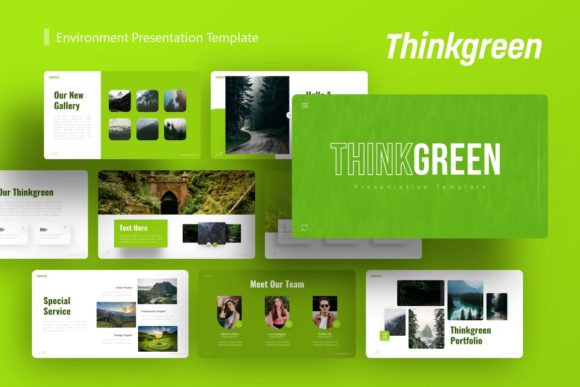
In the landscape of digital communication, finding a presentation asset that balances aesthetic appeal with functional rigidity is often a challenge. The Presentation Template - Think Green and Introducing Thinkgreen Environment Presentation emerges as a specialized solution designed to bridge the gap between environmental messaging and corporate professionalism. While the name suggests a niche focus on sustainability, a closer examination reveals a versatile framework applicable to creative agencies, startups, and personal portfolios. For professionals aged 20 to 50 who manage content creation or business development, understanding the practical utility of this template goes beyond its visual theme; it requires an assessment of its structural integrity, editability, and long-term value in a professional workflow.
Core Characteristics and Structural Integrity
The primary metric for evaluating any slide deck is the balance between volume and usability. This template provides 36 unique slides per variation, a quantity that hits a practical sweet spot. Fewer than 20 slides often forces users to duplicate layouts repetitively, while decks exceeding 60 slides frequently contain filler content that dilutes quality. With 36 distinct options, the Presentation Template - Think Green offers sufficient variety to construct comprehensive pitch decks or annual reports without overwhelming the editor with redundant assets.
Crucially, the architecture relies on Master Slides rather than individual object formatting. For those who have managed large-scale presentations, this distinction is vital. Master Slide integration ensures that global changes—such as updating a logo, adjusting brand colors, or changing typography—propagate instantly across all relevant slides. This feature significantly reduces maintenance time and minimizes the risk of formatting inconsistencies during high-pressure revisions. The handcrafted infographics included in the package are also built natively within PowerPoint. Unlike static images imported from external design software, these vector-based elements remain fully editable. Users can adjust data points, resize components, and recolor shapes directly in the application, preserving the integrity of the design while adapting it to specific datasets.
Versatility Across Business Verticals
Although branded with an environmental identity, the underlying design system supports a wide array of professional use cases. The color palette and iconography are thematic, but the layout structures are universally applicable. This makes the template particularly valuable for organizations where sustainability is a component of a broader narrative rather than the sole focus.
- Creative Agencies and Portfolios: The clean, minimalist aesthetic allows visual work to take precedence. Picture placeholders utilize drag-and-drop functionality, streamlining the process of showcasing photography or design projects without complex masking adjustments.
- Corporate and Business Profiles: The inclusion of structured infographic slides facilitates the visualization of quarterly results, organizational hierarchies, and strategic roadmaps. The professional tone avoids overly playful design tropes, maintaining credibility in boardroom settings.
- Startups and Pitch Decks: Investors respond to clarity. The template’s logical flow supports standard pitch narratives, from problem identification to market analysis and financial projections. The pixel-perfect illustrations add polish without distracting from the core value proposition.
- Educators and Non-Profits: For entities focused on environmental education or advocacy, the thematic alignment reduces cognitive load for the audience. The visual language reinforces the spoken message, making complex ecological concepts more accessible.
This adaptability stems from a modular design philosophy. Elements can be mixed, matched, or removed entirely without breaking the visual coherence of the deck. A marketing director at a tech firm could utilize the data visualization slides while replacing the green accent colors with corporate blue, effectively repurposing the asset for a completely different industry context.
Technical Usability and Asset Management
From a technical standpoint, the deliverables include a .PPTX file, documentation, and vector icons. The presence of dedicated documentation is a significant indicator of quality. Many templates fail not because of poor design, but because users cannot decipher how to manipulate advanced features. Comprehensive guides reduce the learning curve, allowing users to leverage master slides and smart art modifications immediately.
The vector icon set deserves specific attention. In professional presentations, inconsistent icon styles (e.g., mixing line art with filled glyphs) undermine perceived competence. By providing a cohesive library of resizable vector icons, the Presentation Template - Think Green ensures visual consistency. Because these are vectors, they scale infinitely without pixelation, which is essential for modern displays ranging from laptops to large-format projection systems.
However, users must note a critical limitation regarding imagery. All photos seen in the preview are for demonstration purposes only and are not included in the downloadable files. This is standard industry practice due to licensing restrictions, but it necessitates additional preparation. Professionals should budget time for sourcing high-quality, royalty-free stock photography or preparing their own assets before beginning the design phase. Relying solely on placeholder images until the final hour often results in a disjointed final product.
Practical Value and Workflow Efficiency
When assessing return on investment for digital assets, time savings are as important as aesthetic quality. The "easy customizable contents" claim warrants scrutiny. In practice, this template achieves efficiency through standardized text boxes and aligned objects. Text wrapping behaves predictably, and bullet points maintain consistent indentation even when content length varies. These subtle engineering details prevent the frustrating micro-adjustments that consume hours in lesser-quality templates.
The pixel-perfect nature of the illustrations also contributes to workflow speed. Pre-designed diagrams for timelines, cycles, and comparisons serve as starting points rather than blank canvases. Instead of building a circular process diagram from scratch, a user can modify an existing master element. This shifts the creative effort from construction to customization, allowing presenters to focus on narrative strategy rather than graphic design mechanics.
For freelancers and consultants who produce multiple decks monthly, this template functions as a reliable baseline. Establishing a go-to resource eliminates decision fatigue regarding layout selection. Over time, familiarity with the master slide structure compounds efficiency gains, enabling rapid turnaround for client deliverables.
Considerations for Implementation
While the Presentation Template - Think Green offers substantial utility, it is not a universal panacea. Prospective users should evaluate their specific needs against the template's characteristics. The environmental theme, while adaptable, does carry semantic weight. If presenting to an audience highly sensitive to "greenwashing," ensure that the use of this template aligns with genuine sustainability practices or clear educational intent. Using an eco-themed deck for unrelated industries without modification may create tonal dissonance.
Additionally, the depth of customization requires intermediate PowerPoint proficiency. While drag-and-drop features are accessible, maximizing the value of master slides and vector editing assumes a baseline comfort with the software. Novice users may need to invest initial time reviewing the documentation to avoid inadvertently breaking layout relationships. However, this learning investment pays dividends in future editing speed.
The template’s effectiveness also depends on content density. The layouts are optimized for concise, impactful messaging. Users accustomed to text-heavy slides may find the whitespace challenging. Rather than forcing excessive content into designed spaces, professionals should view this as an opportunity to refine their communication strategy. The template encourages best practices in information design by prioritizing readability and visual hierarchy over data dumping.
Long-Term Viability and Audience Fit
Digital assets depreciate quickly as design trends evolve. The Presentation Template - Think Green mitigates obsolescence through classic design principles. Clean lines, ample negative space, and functional typography age better than trendy effects or ornate decorations. This longevity makes it a sustainable addition to a professional resource library rather than a single-use purchase.
The ideal beneficiary of this asset is a professional who values structure as much as style. Marketers developing ESG (Environmental, Social, and Governance) reports will find immediate relevance. Startup founders pitching sustainable technologies gain a polished vessel for their vision. Educators teaching environmental science receive a tool that enhances pedagogical clarity. Even general business users seeking a fresh, organized alternative to default themes can extract significant value through rebranding.
Ultimately, the decision to adopt this template should be driven by workflow requirements and audience expectations. It succeeds not merely as a collection of pretty slides, but as a systematic approach to visual communication. By combining thematic coherence with technical robustness, it addresses the dual needs of aesthetic engagement and operational efficiency. For professionals willing to invest the initial setup time and source appropriate imagery, it represents a reliable foundation for diverse presentation challenges.
In an era where visual literacy is paramount, tools like the Presentation Template - Think Green serve as force multipliers. They do not replace the need for strong content or compelling delivery, but they remove friction from the creation process. When selected thoughtfully and implemented skillfully, such templates elevate professional output, ensuring that important messages are received with the clarity and impact they deserve. Whether communicating environmental initiatives or corporate strategies, the right framework transforms information into insight.